Blog
Quantum’s place in AI? Alongside the rest of the compute

Blog
October 9, 2026
by Jason Lynch, CEO
On 14 October 2026, I'm speaking at The International AI Summit in Dublin, and one question keeps coming up: where does quantum first fit in AI?
Quantum starts as an accelerator. And where that accelerator sits matters. GPUs aren't going anywhere. They train the models, run inference and underpin the AI factories now being built. Quantum will have to earn its place alongside them, accelerating specific parts of a workload where it can deliver an advantage. Follow that starting point and the consequences get interesting.
Most candidate quantum algorithms are hybrid. Classical code sets parameters. The quantum processor executes a circuit. Measurements come back. The classical side updates the parameters. The QPU runs again. Round and round goes the loop.
AWS has a useful way of thinking about this: the communication-to-computation ratio. How much time are you spending moving information between classical and quantum processors compared with actually computing? If communication is insignificant, a remote QPU is perfectly sensible. If communication dominates, moving the processors closer together materially changes time to solution.
This should sound familiar to anyone watching the AI build-out. The hyperscalers aren't simply accumulating GPUs. They are spending billions on tightly connected AI factories because communication between processors matters. Moving data around the system is part of the computation.
Quantum follows the same logic. If a QPU is accelerating one part of a tightly coupled workload, you want quantum compute close to the classical compute that needs it.
"Cloud versus on-premise” doesn’t capture that distinction. A cloud data center can bring processors close together too. What matters is how efficiently they work together.
Once proximity matters, power, cooling, footprint, control and interfaces stop being facilities questions. They become part of system performance. Deployability becomes a core computational characteristic.
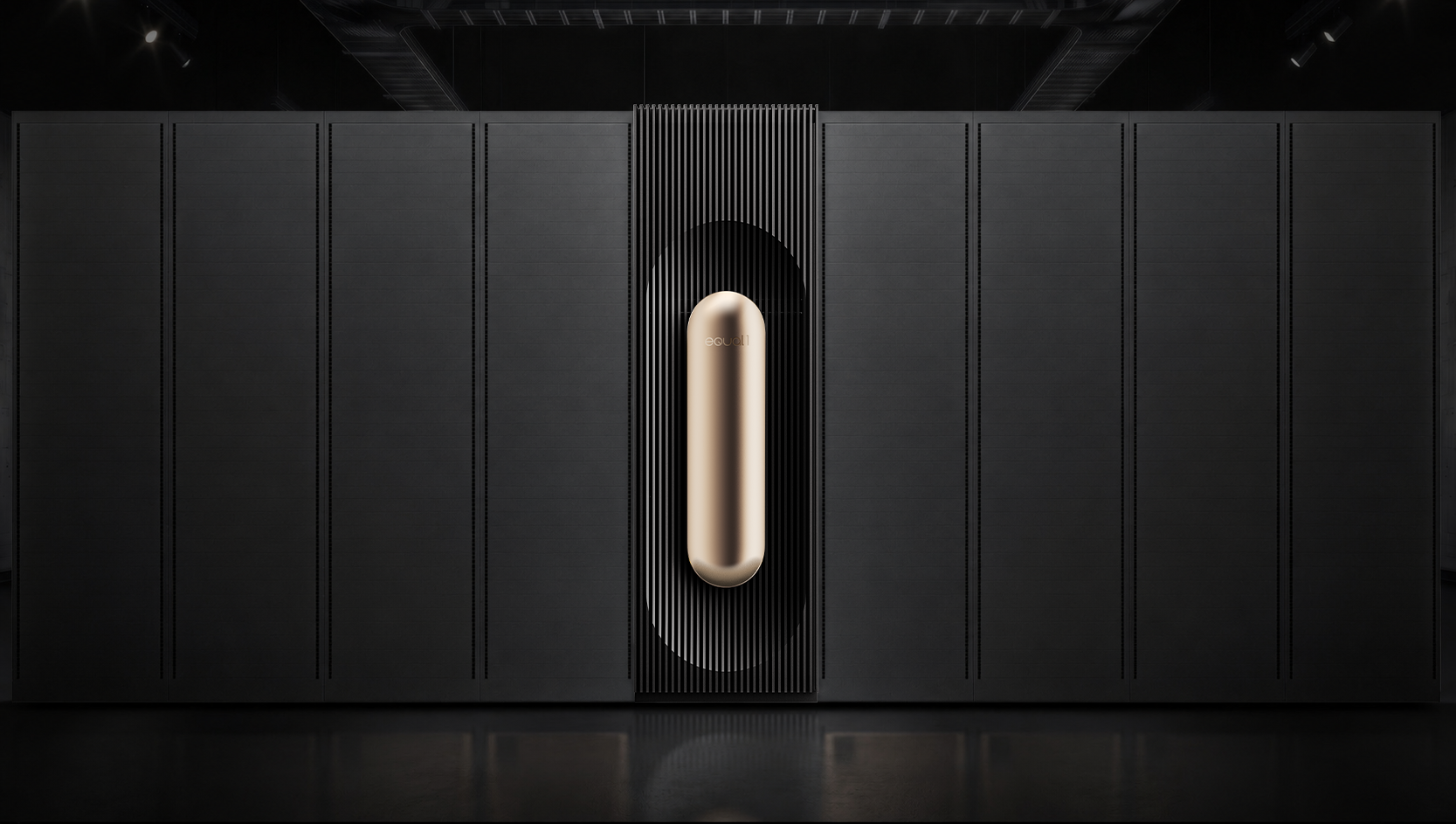
That is why Equal1 designed RacQ as a rack-scale quantum computer. The rack isn't a convenient form factor. It lets quantum live where an accelerator needs to live: alongside the rest of the compute.
But acceleration isn't the deepest reason AI needs quantum. In the next post, I’ll explore a deeper opportunity: what quantum could bring to AI’s ability to model the natural world.
Fits the rack. Co-located with classical compute. Hybrid by default.